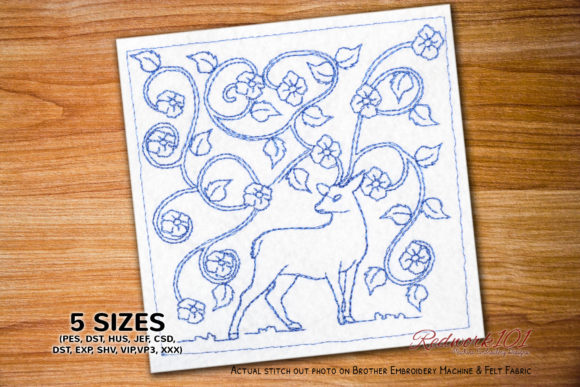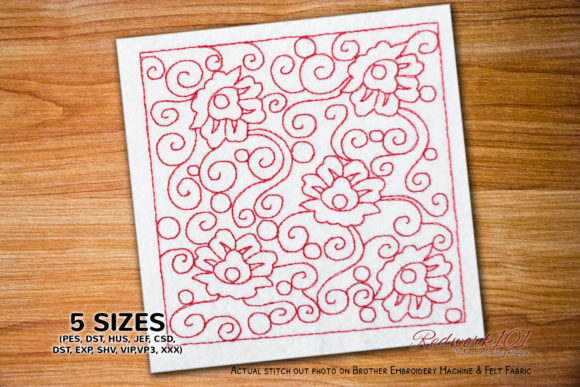
Abstract Flower Line Art Bluework
Embroidery design trends often cycle through intricate motifs and hyper-realistic details, but there is a quiet, compelling power in simplicity. Abstract Flower Line Art Bluework captures that spirit. It uses clean, flowing lines and a single hue – classic blue – to create floral forms that feel both modern and timeless. The beauty of this style lies in what it leaves out. By stripping away fills and complex shading, the line art draws attention to the gesture of the flower: the curl of a petal, the reach of a stem, the negative space that shapes the bloom. This approach works well on everything from lightweight summer garments to structured home accessories, and it adapts beautifully to machine embroidery – especially when you have the flexibility to choose or skip the optional Box Stitch border.
What Makes Abstract Flower Line Art Bluework Distinctive
The term “bluework” traditionally refers to whitework embroidery done in blue thread, but here it takes on a broader meaning. Instead of dense satin stitches or layered textures, the design relies on line weight and placement to create visual interest. The abstract quality means the flower isn’t perfectly symmetrical or botanically accurate; it suggests rather than declares. This gives the design a hand-drawn feel, as if sketched with a fine blue pen. The result is an embroidery that reads as fresh, airy, and intentional – not fussy. For machine embroiderers, the open nature of line art also means fewer stitch counts, shorter sew times, and less thread changes, making it a practical choice for production work or personal projects alike.
Creative Applications Beyond the Summer Outfit
While the original description highlights a summer outfit as a prime canvas, Abstract Flower Line Art Bluework fits effortlessly into many other contexts. Consider these possibilities:
- Layered garment accents: Embroider the design near the hem of a linen dress, along the cuff of a rolled sleeve, or running up the side seam of wide-leg trousers. The linear nature of bluework adds a subtle graphic element without overpowering the silhouette.
- Accessories with impact: A single abstract blue flower on a canvas tote, a linen pouch, or even a pair of denim jacket lapels turns an everyday item into a conversation piece. The blue thread pops against natural fabrics like cotton, linen, and hemp.
- Home textiles: Repeat the motif in a row across the edge of a throw pillow, or center a large-scale version on a tea towel. The same design can be scaled up for a duvet cover or down for a handkerchief – the line art maintains its clarity at various sizes.
- Mixing with patchwork or visible mending: Use the blue line flower as an embellishment over a mended tear or alongside other decorative stitches. The boldness of blue contrasts nicely with neutral or faded fabrics, making the repair feel deliberate and artistic.
Each application benefits from the design’s inherent simplicity. Because there’s no fill, the embroidery fabric keeps its drape and breathability – a major advantage for warm-weather clothing and soft furnishings.
For Small Business Owners and Freelancers
If you run a custom embroidery business, Abstract Flower Line Art Bluework is a strong addition to your portfolio. Its low stitch count means faster turnaround, and the single-color format reduces thread inventory needs. You can offer it as a standalone design or as part of a set of line art botanicals in various blues and neutrals. Because the optional Box Stitch lets customers decide on the framing, you can provide both a bordered version and a free-floating version without redesigning the file. This flexibility appeals to clients who want consistent branding across multiple product lines – a minimalist aesthetic that works on tote bags, caps, pillows, and baby onesies alike.
For Hobbyists and Home Embroiderers
Hobbyists often look for projects that look complex but are manageable on a home machine. The abstract flower line art fits perfectly. You can test the design on scrap fabric first, adjust the size, and decide whether to include the outer box. The multiple file formats included (PES, DST, EXP, etc.) mean you don’t have to worry about conversion – just load and stitch. A practical tip: use a sharp needle (size 75/11) and a 40-weight polyester or rayon thread in a medium blue to get that clean, pen-like line. Avoid too dark a blue, which may overwhelm the delicate strokes; a cornflower or sky blue reads as fresh and airy.
For Marketers and Content Creators
If you create content around embroidery or slow fashion, this design offers a rich visual theme. You can film time-lapse videos of the stitching process, highlight the contrast between the blue lines and white or natural fabric, and discuss how abstract line art fits into modern crafting. The design’s versatility gives you multiple angles: a “five ways to style this embroidery” post, a tutorial on removing the outer box border, or a comparison of bluework and redwork techniques. Because the design files work across major machine brands, you can speak to a wide audience without alienating any specific format user.
Working With the Box Stitch and Color Options
One detail in the original description is worth calling out separately: the Box Stitch border is optional, and its color is different from the main design unless the box is integral. This is a deliberate design choice, not an error. The outer frame can act as a boundary that gives the abstract flower a defined space, particularly useful on larger garments where placement needs some structure. However, the box may not suit every project. On a delicate blouse or a curved surface like a sleeve cap, removing the box lets the flower float naturally. In your embroidery software or machine, you can simply skip or delete the color representing the box thread. Most formats include separate color stops, so you can choose to stitch only the lines that form the flower. If you prefer a consistent monochrome look, you could reassign the box thread to match the flower blue – but the design is optimized to look balanced either way.
For custom projects, experiment with the box as a design element rather than a mere border. Embroider it in a slightly lighter or darker blue for a tonal effect, or use a contrasting color like coral or ochre if your brand or outfit calls for a bolder accent. The line art itself is neutral enough to support these variations without losing its identity.
Practical Recommendations for Clear, Consistent Results
- Stabilize properly: Line art designs show every wobble. Use a cut-away stabilizer for knits and a tear-away for wovens. Hoop firmly but without distorting the grain of the fabric.
- Test stitch-out first: Sew the design on a scrap of the same fabric you plan to use. This lets you check tension, thread color, and scale before committing to the final piece.
- Scale consciously: The abstract flower retains its charm from about 2 inches up to 6 or 7 inches. Below 2 inches the lines may blur together; above 7 inches the negative spaces might feel too wide for some fabrics. Scale within that range for best results.
- Thread choice matters: Matte or semi-matte threads (like polyester or cotton) look more like hand-drawn lines than high-sheen rayons. If you want a subtle glow, a rayon thread can work, but test it first to see if it overpowers the design.
- Placement and balance: Because the design is open, it works well on asymmetric placements – off-center near a collar, along a pocket edge, or clustered in a small group. Avoid dead-center placement unless the garment is very structured; the abstract flow feels more dynamic when offset.
Project Ideas to Inspire Your Next Create
Think beyond the single flower. Here are three realistic project directions that use the Abstract Flower Line Art Bluework as a core element:
- A summer capsule wardrobe collection: Embroider the design on three pieces – a linen shirt, a cotton skirt, and a canvas belt bag – using the same blue thread. The repeated motif ties the pieces together without matching exactly. Remove the box on the shirt, keep it on the belt bag, and use a smaller scale on the skirt for contrast.
- Gift set for a friend: Pair a hand-embroidered handkerchief with a matching small tote. Use the same file but mirror or rotate the design for each item. The recipient gets a coordinated set that feels custom without being matchy-matchy.
- Branded merch for creatives: If you run a small art brand or stationery shop, embroider the abstract blue flower on canvas pouches or notebook covers. Use your brand color as the thread. The line art reads as sophisticated and minimal, aligning with trends in sustainable packaging and handcrafted goods.
Keeping Results Original and Audience-Friendly
Abstract line art embroidery succeeds when it feels spontaneous, but the execution still needs precision. As you scale the design, remember that the thread thickness stays constant – a 4-inch flower with very fine details may need a thinner needle or lighter density. Also, consider your audience. If you are creating for customers who prefer modern minimalism, the clean blue lines will resonate. If your audience leans bohemian, you can pair the design with decorative stitches, beads, or even tie-dye panels. The same base design becomes a canvas for different aesthetics simply by changing the supporting fabric, thread color, or surrounding embellishments.
Ultimately, Abstract Flower Line Art Bluework gives you a versatile tool that fits into a wide range of creative workflows. Whether you are a business owner looking for efficient designs, a hobbyist exploring line art, or a content creator building a visual story, the combination of abstract floral forms, single-color stitching, and optional framing offers room to experiment without overcomplicating the process. Choose your fabric, load your machine, and let the blue lines guide your summer projects or everyday favorites into something uniquely yours.