Beyond Resolution: Why Laptop Display Quality Is the New Productivity Powerhouse
For years, laptop buying decisions revolved around processor speed, RAM capacity, and storage type. While those components remain important, a quieter shift has been underway—one that places the Laptop Display Company and its engineering philosophy at the center of professional workflows. Whether you are a graphic designer matching brand colors, a data analyst reviewing complex visualizations, or an entrepreneur presenting to clients, the screen you work on shapes your output more than any other single component. This article explores why display technology has become the defining factor in modern laptops, how Scientific Rep principles of accuracy and reproducibility influence the market, and what this means for anyone who relies on their laptop to earn a living.
The Screen as a Strategic Asset
It is easy to underestimate how much time we spend looking at laptop displays. For knowledge workers, the number routinely exceeds eight hours per day. Over a year, that adds up to thousands of hours of visual engagement. Yet many professionals still treat the display as a commodity—a pane of glass that simply lights up. The reality is that a high-quality panel from a reputable Laptop Display Company directly affects decision-making speed, creative accuracy, and even physical comfort.
Consider a freelance photographer who edits raw image files on a laptop with a wide gamut display. Without accurate color reproduction, what looks like a warm sunset on screen may print as a dull orange. The cost of that mismatch goes beyond wasted paper—it damages client trust. Similarly, a financial trader who monitors multiple charts on a high-refresh-rate panel can spot trends milliseconds faster than someone working on a 60 Hz screen. In both cases, the display is not a passive output device; it is an active tool for producing high-quality work.
Understanding the Laptop Display Company Approach
When we talk about a Laptop Display Company, we are referring not just to manufacturers of panels but to the ecosystem of engineers, calibration specialists, and quality assurance teams who define what a screen can do. These organizations invest heavily in research around luminance uniformity, color consistency, and power efficiency. Their goal is to create displays that meet the needs of users who cannot afford visual ambiguity.
One of the lesser-known but critical aspects of this work is adherence to what might be called Scientific Rep—a shorthand for scientific reproducibility in display performance. In practical terms, this means that two laptops from the same production batch should render the same image identically. It also means that the display should maintain its accuracy over time, resisting the color drift that plagues older panels. For teams working remotely across different devices, this consistency is invaluable. A brand identity that looks vibrant on a designer's laptop should look equally vibrant on a project manager's laptop, otherwise collaboration breaks down.
Color Accuracy and the Creative Workflow
Creative professionals have long been the loudest advocates for better laptop displays. Photographers, videographers, and motion designers need panels that cover the DCI-P3 or Adobe RGB color spaces with minimal Delta E variance. But the demand for accurate color is no longer confined to creative studios. Marketers who produce social media content, product managers who review UI mockups, and even educators who create presentation slides benefit from screens that show what they intend.
A Laptop Display Company that prioritizes factory calibration removes the guesswork. Instead of buying a separate hardware calibrator and spending an hour tuning the screen, a professional can unbox the laptop and trust that 95% of the color accuracy is already there. This is not a luxury—it is a time-saving measure that pays for itself within the first few projects. Combined with the Scientific Rep philosophy of consistent output across units, teams can share screenshots and screen recordings knowing that what they see is what colleagues will see.
High Refresh Rates Beyond Gaming
The conversation around high refresh rates has traditionally belonged to gamers, but that is changing rapidly. Laptops with 120 Hz or 165 Hz panels are entering mainstream professional use, and for good reason. Scrolling through long documents, spreadsheets, or code editors becomes noticeably smoother at higher refresh rates. The reduction in motion blur reduces eye strain over extended work sessions, which is a tangible benefit for anyone who spends hours reading or editing text.
Furthermore, video editors working with 24 fps or 30 fps footage benefit from a display that can refresh multiple times per frame, reducing judder during playback. A Laptop Display Company that supports variable refresh rate technology allows the screen to adapt dynamically to content, saving battery life when the display is static and delivering fluid motion when needed. This convergence of refresh rate and professional utility is one of the most underappreciated trends in laptop design today.
Why the Market Is Paying Attention
Laptop manufacturers are responding to a clear signal from the market: buyers are willing to pay a premium for superior displays. This was not always the case. Five years ago, the average professional prioritized processing power over pixel quality. Today, with CPU performance plateauing for everyday tasks, the display has become the primary differentiator. A laptop with a mediocre screen feels dated immediately, while one with a vibrant, accurate panel retains its value both functionally and perceptually.
Several forces are driving this shift. First, remote and hybrid work has made the laptop the central device for most knowledge workers. The external monitor setup that used to be standard in offices is now optional, so the built-in display must do more heavy lifting. Second, content creation has democratized. A teenager editing a YouTube video cares about color just as much as a professional videographer, even if their budget is smaller. Third, wellness awareness has increased. Users understand that prolonged exposure to low-quality screens contributes to digital eye fatigue, and they actively seek laptops with flicker-free backlighting and blue light management.
All of these factors create an environment where the Scientific Rep approach—treating display performance as a measurable, reproducible specification—becomes a competitive advantage. Brands that can guarantee a certain level of luminance uniformity or color accuracy across their product lines earn trust in a crowded market.
Practical Implications for Different Users
To make this discussion concrete, it helps to consider specific user profiles and how display quality affects their daily work.
Entrepreneurs and Business Owners
For entrepreneurs, every client meeting is a opportunity to demonstrate competence. When presenting a pitch deck on a laptop with an accurate, bright display, the visuals look professional and polished. Dark, washed-out screens, by contrast, undermine credibility. Entrepreneurs also travel frequently, so they benefit from a laptop that can adjust to different lighting conditions—whether that is a dim co-working space or a sunny café. A good Laptop Display Company designs panels with high peak brightness and anti-glare coatings that reduce reflections without distorting colors.
Software Developers and Data Professionals
Developers and data analysts might not think they need a premium display, but they do. Reading code for hours requires sharp text rendering, which depends on pixel density and subpixel layout. A 1080p panel on a 15-inch laptop can make small fonts look fuzzy, whereas a Retina-class display (around 220 ppi) renders text like printed type. For data professionals who work with dashboards and visualizations, color consistency ensures that red warning indicators, green profit metrics, and blue trend lines are distinguishable and meaningful. A display that follows Scientific Rep standards guarantees that these color distinctions are preserved across devices.
Marketers and Content Strategists
Marketers live and die by visual content. From social media graphics to landing page designs, the accuracy of the laptop display directly impacts the quality of the final output. A marketer who approves a campaign asset on a laptop with poor color reproduction may later find that the asset looks completely different on the client's screen. This leads to costly revisions and strained relationships. Investing in a laptop from a company that calibrates displays at the factory eliminates a variable in an already complex workflow. It is one less thing to worry about when deadlines are tight.
The Role of Vector Illustration in Understanding Display Quality
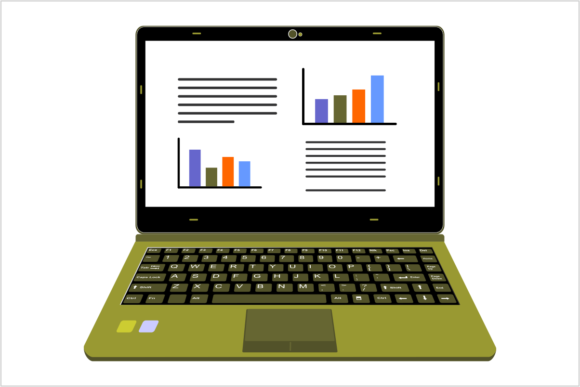
When researching laptop displays, you may encounter marketing materials that include a realistic laptop vector illustration. This is not merely decorative. A well-crafted vector illustration can communicate the proportions, bezel size, screen-to-body ratio, and even the matte or glossy finish of a display without the need for a physical photograph. For a potential buyer, seeing a realistic laptop vector illustration alongside specifications like sRGB coverage or peak brightness helps translate technical specs into real-world appearance.
Moreover, a Laptop Display Company that invests in accurate product visualization signals attention to detail. If a brand bothers to render its laptop accurately in vector form, it likely takes similar care with the actual display engineering. While a vector illustration is no substitute for hands-on testing, it serves as a useful indicator of a company's overall approach to quality. Combined with Scientific Rep data sheets, it gives the buyer a fuller picture before making a purchase.
Connecting Display Quality to Larger Industry Trends
The focus on laptop displays is part of a broader movement toward immersive and accurate digital experiences. In the smartphone market, high-refresh-rate OLED panels have become standard. In the television market, HDR and wide color gamut are table stakes. Laptops are now catching up, driven by the same consumer expectations. People do not want to compromise on visual quality just because they are using a portable device.
This trend also aligns with sustainability. A high-quality laptop display that maintains its performance for four or five years reduces the need for upgrades. Instead of replacing a laptop because the screen has faded or developed backlight bleed, a professional can keep using a device that still meets the Scientific Rep benchmarks for color and brightness. This extends the useful life of the product and reduces electronic waste—an outcome that benefits both the user and the planet.
Another related development is the rise of AI-powered image processing. Many modern laptops use machine learning to adjust brightness, contrast, and color temperature based on ambient light and content type. While these features are useful, they only work well if the underlying display hardware is capable of fine-grained adjustments. A screen from a trusted Laptop Display Company with high bit-depth support (10-bit or 8-bit+FRC) can show smooth gradients and subtle tonal shifts, enabling AI enhancements to operate without introducing artifacts.
Final Observations
The laptop display has evolved from a simple output device into a strategic component of professional productivity. Whether you are a creator, entrepreneur, marketer, or enthusiast, the quality of your screen influences how you work, how you feel at the end of the day, and how others perceive your output. Paying attention to specifications like color gamut, refresh rate, brightness, and factory calibration is not overkill—it is a practical decision that pays dividends over the lifetime of the device.
A Laptop Display Company that commits to rigorous engineering and Scientific Rep principles offers more than just a panel. It offers consistency, reliability, and peace of mind. In a world where much of our communication is visual, the screen deserves to be more than an afterthought. The next time you evaluate a laptop, look beyond the processor and give the display the weight it deserves. Your eyes—and your work—will thank you.
Disclaimer: The realistic laptop vector illustration mentioned in this article is a visual tool used to communicate design and display quality. Actual performance should be verified through professional reviews and hands-on testing.