Backup Application Tablet Interface: Practical Design for Everyday Data Management
If you have ever stared at a spinning wheel on your phone while trying to upload a file, you already know how much a well-designed backup interface matters. The backup application tablet interface is not just another screen mockup. It is the bridge between your data and the cloud, and when it works well, you barely notice it. When it does not, you feel it immediately. Whether you are a freelancer backing up client photos at a coffee shop or an IT manager configuring corporate tablets, the interface you interact with shapes how efficiently your data gets copied, stored, and accessed.
What the Backup Application Tablet Interface Actually Does
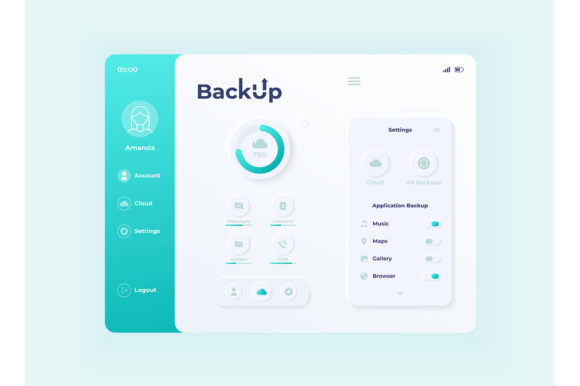
At its core, a backup application tablet interface is the visual and interactive layer that lets you manage data uploads to cloud storage from a tablet device. Think of it as the dashboard where you see your files, select what to back up, monitor progress, and confirm completion. In day mode design, the interface uses light backgrounds, clear typography, and high contrast to keep readability strong under normal lighting conditions. This matters because tablets are used everywhere from office desks to kitchen tables to outdoor patios. A flat UI approach removes unnecessary shadows and gradients, making the interface feel snappy and uncluttered. The user data copying screen is the central moment of action: files move, progress bars fill, and the cloud icon signals a successful transfer. When designers package this as a vector template in formats like EPS and JPG inside a ZIP file, they give developers and content creators a ready-to-use starting point for building or visualizing their own backup apps.
Real Situations Where This Interface Shines
Imagine a freelance photographer who just finished a wedding shoot. Sitting in a hotel room late at night, they pull out their tablet, plug in the SD card reader, and open the backup app. The tablet interface shows a clean grid of files with checkboxes. They tap select all, hit backup, and watch the progress bar move steadily. The flat UI makes it easy to see which files have been uploaded, and the day mode design ensures the screen remains readable even under dim bedside lighting. For this photographer, the backup application tablet interface is not about aesthetics. It is about trust. They need to know their high-resolution images are safely on the cloud before they sleep.
Consider a small business owner who manages inventory across multiple locations. Their tablet sits on a desk in the back office. Every evening, the backup app syncs sales data, customer records, and receipt images to a remote server. The interface shows a simple status screen with a timestamp of the last successful backup and a list of pending files. When something fails, the interface highlights the error clearly without flooding the screen with technical jargon. For this user, the backup application tablet interface becomes a daily checkpoint that quietly confirms operations are running smoothly.
A university student might use the same interface differently. They back up research papers, lecture recordings, and important emails. Their tablet is their primary device for studying on the go. The flat UI and clean layout help them avoid confusion when selecting specific folders for backup. They appreciate that the interface does not slow down or freeze during upload, because their time between classes is tight. For them, the backup app is a safety net against lost assignments and forgotten notes.
Different Users, Different Needs
- Designers and developers working on backup apps benefit from the vector template. They can open the EPS file, tweak colors, adjust button placements, and quickly prototype a user flow without starting from scratch. The inclusion of JPG gives them a quick preview to share with clients or stakeholders without needing special software.
- IT administrators in organizations that deploy tablets to field workers need an interface that minimizes support calls. A clear, intuitive backup screen reduces user errors, such as accidentally overwriting important files or skipping backup entirely. The day mode design also ensures visibility under various lighting conditions, which is critical for workers in warehouses, hospitals, or outdoor environments.
- Content creators and digital marketers need to back up large media files regularly. They often work in bursts of heavy activity followed by quiet periods. A tablet interface that clearly shows remaining upload time, file size, and successful completion helps them plan their workflow. They might also use the visual template to pitch app concepts to clients or include in design portfolios.
- Remote workers and digital nomads rely on tablets as lightweight devices for managing work files across multiple cloud services. The backup application tablet interface becomes a daily tool for syncing documents, presentations, and spreadsheets. They value simplicity and speed because they often work from locations with variable internet quality.
Practical Observations from Using and Choosing Backup Tablet Interfaces
One thing you notice quickly when using a backup application tablet interface is that the quality of feedback matters. A progress bar that updates in real time feels reassuring. A vague "uploading" message without details leaves you guessing. The best interfaces show you exactly which file is being transferred, how large it is, and roughly how long it will take. In day mode, these elements need to be readable without straining your eyes, especially if the tablet is used for extended periods.
Another observation is that the flat UI style works well for backup apps because it reduces visual noise. When you are dealing with dozens or hundreds of files, you want the interface to be calm and organized. Strong typography, clear icons, and logical grouping of options help you move quickly through the backup process. The lack of excessive ornamentation also means the interface loads faster and consumes fewer device resources, which is important during heavy uploads.
File format compatibility is another real-world consideration. Having the template available as both EPS and JPG inside a ZIP file gives you flexibility. EPS is vector-based, so you can scale it to any screen size without losing quality. JPG gives you a quick visual reference that opens on any device without special software. This combination is useful whether you are a developer integrating the design into a real app or a designer presenting concepts to a team.
Common Considerations Before Using or Choosing a Backup Tablet Interface
Before adopting a backup application tablet interface template or designing one from scratch, think about the context of use. Day mode design is excellent for well-lit environments, but if your users frequently work in low-light conditions, you might need to consider a dark mode option as well. The template you choose should be flexible enough to support both or at least be easy to convert.
Consider the types of data being backed up. Large video files require a different interface treatment than small text documents. A good interface will adapt its display to show relevant information depending on file size and quantity. Some users need granular control over which folders sync, while others just want a single backup button. The interface should accommodate both mindsets without overwhelming either group.
Another practical point is the cloud uploading process itself. The interface should clearly communicate connection status. If the internet drops during backup, what does the screen show? Does it pause gracefully and resume automatically, or does it throw an error that confuses the user? These behaviors are part of the interface design, even if they are not always visible in a static template. When evaluating a vector template, think about how it implies these states. Good templates will include elements like progress animations, status icons, and error alerts that you can build into your final app.
There is also the question of device orientation. Tablets are used in both portrait and landscape modes. A well-designed backup application tablet interface should work naturally in both orientations without breaking the layout or hiding important controls. This is something to verify when choosing a template, especially if you plan to build a fully responsive app.
Strengths and Potential Limitations
The main strength of a dedicated backup application tablet interface is that it centralizes the backup process into one clear, focused screen. Instead of digging through settings in different apps, you get a unified view of what is being backed up and how far along the process is. The traditional flat UI style used in day mode feels approachable and modern, which helps users feel confident about using the app regularly.
Another strength is the template format itself. Having an EPS vector file means you can customize colors, typography, and layout elements to match your brand or project requirements. The included JPG gives you an immediate visual reference that you can use in documents, presentations, or client proposals without opening editing software. This saves time early in the design process.
However, there are some limitations worth noting. A static vector template cannot fully capture interactive behaviors like swipe gestures, drag-and-drop file selection, or animated progress transitions. These are crucial for a polished user experience, and they require additional development work beyond the template. The template gives you a strong visual foundation, but it does not replace usability testing or interaction design.
Also, because the template is designed specifically for tablet form factors, it may need adaptation for smaller phones or larger desktop monitors. Tablets sit in a middle ground, and the layout that works beautifully on a 10-inch screen might feel cramped on a phone or stretched on a monitor. If you plan to deploy your backup app across multiple device types, be prepared to adjust the interface for each screen size.
Day mode itself has a limitation: it can be uncomfortable in very bright sunlight or in complete darkness. While it is designed for typical indoor and outdoor daytime use, extreme lighting conditions may require an adaptive brightness feature or a separate night mode theme. If your target audience uses tablets in diverse environments, consider how the interface will handle those scenarios beyond the basic day mode design.
Putting the Interface to Work in Your Own Context
If you are a developer or designer evaluating the backup application tablet interface vector template, start by exploring the EPS file in a vector editing tool. Experiment with changing the accent color to match your brand. Replace placeholder text with realistic file names and folder structures. Adjust the progress bar width to match your typical file transfer sizes. This hands-on approach will reveal how well the template fits your specific use case.
For non-designers who need to communicate a backup app concept to a team or client, use the JPG preview as a discussion starter. Ask questions like: Does the upload status give enough information? Are the buttons placed where users expect them? Would someone feel comfortable using this screen every day? These conversations can guide your development priorities.
For end users evaluating a backup app that uses such an interface, pay attention to how the screen behaves during actual use. Does it show clear progress? Does it handle interruptions gracefully? Is the file selection intuitive? The best backup application tablet interface is the one that gets out of your way and lets you focus on your work, knowing your data is handled safely behind the scenes.
Ultimately, the backup application tablet interface is a tool that serves a deeply practical need. Whether you are designing it, choosing it, or using it every day, the interface should make the act of backing up feel straightforward and trustworthy. A good template can accelerate design and development, but the real measure of success is how well it works when real users have real data at stake.