Sewing Lovers and Fairies Clipart: A Strategic Creative Resource for Thoughtful Projects
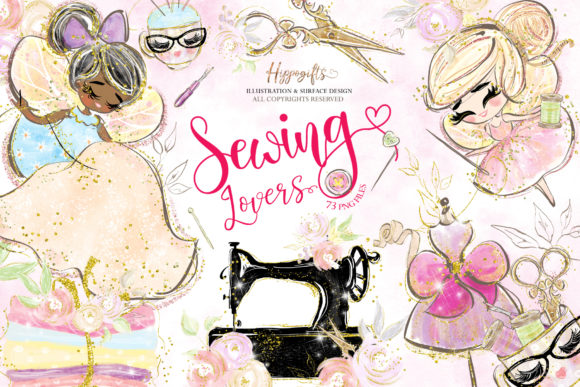
For creators, small business owners, and hobbyists who work with paper crafts, digital design, or textile projects, the right visual assets can significantly influence both the quality of the finished product and the efficiency of the creative process. Sewing Lovers and Fairies Clipart is a curated collection of 73 PNG files, each saved at 300 dpi and ranging from approximately 3 by 3 inches up to 9 by 9 inches. This set combines whimsical fairy motifs with sewing-themed imagery, offering a versatile toolkit for anyone who needs repeatable, high-resolution graphics for physical and digital applications. The value of such a collection lies not in its novelty alone, but in how thoughtfully it can be integrated into real projects to support branding, productivity, communication, and long-term creative planning.
Understanding the Collection and Its Practical Foundations
At its core, this clipart set provides individual illustrations that can be used independently or combined to build larger compositions. Each file is separated, giving you control over placement, scaling, and layering without having to extract elements from a crowded layout. The 300 dpi resolution ensures that prints remain sharp, whether you are producing small stickers or larger decorations for a planner or web header. Because the images range in size, you have flexibility in how you crop, rotate, or resize them without losing clarity.
For the adult audience—entrepreneurs, marketers, freelancers, educators, and small business owners—the practical foundation matters more than the aesthetic appeal alone. When you know exactly what you are working with, you can plan projects with confidence. The fairy and sewing themes might initially appear niche, but they actually serve a wide range of applications: product labels for handmade goods, decorative elements for sewing or crafting blogs, visual accents for instructional materials, or thematic touches for event stationery. The key is to approach the collection as a systematic resource rather than a random assortment of cute images.
Aligning Clipart Assets with Your Creative and Business Goals
Every visual decision you make should connect to a larger objective. Whether you are preparing a branding package for a small sewing business, designing a scrapbook page for a client, or creating planner stickers to sell on an online marketplace, your clipart choices influence how your audience perceives your work. Sewing Lovers and Fairies Clipart can support several strategic goals if used deliberately.
Brand positioning benefits from consistent visual language. If your brand centers on handmade, whimsical, or vintage-inspired sewing products, this collection reinforces that identity. Using fairy motifs alongside sewing elements communicates creativity, attention to detail, and a touch of magic—qualities that resonate with customers looking for personalized, thoughtful goods. For a blogger or social media content creator, consistent clipart usage across headers, pins, and post graphics helps build recognition without requiring expensive custom illustration work.
Operational efficiency improves when you have a reliable library of pre-made assets. Instead of commissioning new illustrations for each project, you can draw from this set and repurpose elements across multiple outputs. A single fairy holding a needle and thread, for example, could appear on a product tag, a social media graphic, an email header, and a printed instruction card. This repeatability saves time and ensures cohesion across touchpoints.
Customer experience also benefits. When you use high-quality clipart in packaging, cards, or digital downloads, you create a polished, professional impression. Buyers of sewing patterns, fabric kits, or handmade accessories appreciate the extra effort that goes into presentation. Thoughtfully placed illustrations can elevate a simple paper bag or a PDF cover into something memorable, increasing the likelihood of repeat purchases and word-of-mouth referrals.
Where and When These Illustrations Deliver the Most Value
The 73 PNG files in this collection are suitable for both physical and digital environments. Understanding where each format excels helps you decide when to rely on clipart versus when to create original graphics.
Paper Crafts and Scrapbooking
For physical scrapbooking, decoupage, and papercraft projects, having individual images at 300 dpi is essential. You can print as many copies as you need at home, experiment with placement on a page, and layer elements without worrying about pixelation. A common mistake is using clipart that is too small for the intended layout, leading to stretched or blurry results. Because these files range up to 9 by 9 inches, you have room to work with larger focal points. Consider planning your page composition in advance: decide which fairy will anchor the spread, which sewing icons will frame the edges, and which smaller elements will fill gaps. This intentionality prevents clutter and creates a balanced design.
Digital Projects and Branding Assets
Digital scrapbooking, blog decorations, web headers, and planner layouts all benefit from PNG files with transparent backgrounds. You can drop illustrations directly into editing software without manually removing backgrounds. For a sewing supply shop, using a fairy with a thimble or spool of thread in a website banner immediately communicates the niche theme. For a pattern designer, incorporating these images into preview mockups can make listings stand out on platforms like Etsy or Creative Market.
When planning digital content, think about the user journey. A web header should be simple and readable, so choose one or two strong illustrations rather than a collage. A blog post about sewing tips might benefit from a small fairy accent near the title or at the end of the article. In a digital planner, use the images as decorative stickers that can be resized and moved around the calendar. The flexibility of separate files supports this kind of modular use.
Physical Textile and Fabric Applications
The patterns can also be used for fabric projects. While the clipart itself is digital, you can print it onto transfer paper, iron it onto fabric, or use it as a guide for embroidery or appliqué. This opens possibilities for creating custom fabric labels, tote bag decorations, quilt blocks, or garment embellishments. If you are a small business owner selling handmade textiles, adding a consistent visual motif across your products—like a fairy with a needle—can become a signature element that buyers associate with your brand.
Strategic Considerations Before You Start Using the Clipart
Before incorporating any clipart into a project, pause to evaluate a few factors that will determine whether the result supports your goals or undermines them.
- Resolution and scaling: At 300 dpi, these files are suitable for print, but scaling them beyond their original dimensions can still degrade quality. Know the final output size before you begin. If you need a wall poster, a 9-inch file may not be enough. If you are making small stickers, even the 3-inch files will work well.
- Color consistency: The product description notes that different monitors display colors differently. If color accuracy is critical for your brand or project, test prints are non-negotiable. Print one sample before committing to a large run of stickers or packaging. Adjust your editing software's color profile if needed.
- File organization: With 73 individual PNGs, you need a system. Label files clearly during storage, and consider grouping them by theme (fairies, sewing tools, combined motifs) to speed up retrieval. A disorganized asset library defeats the purpose of having a ready-to-use resource.
- Licensing and commercial use: Understand the usage rights for this specific collection. While many clipart sets allow personal and small-scale commercial use, confirm whether you can sell products made with these images, especially if you plan to mass-produce. Respecting licensing protects you legally and supports the creators who made the resource.
How to Use Sewing Lovers and Fairies Clipart Intentionally
Randomly dropping clipart into a project without a plan often results in a disjointed, low-quality presentation. Intentional use requires a clear process.
- Define your primary message or function. What should the viewer notice first? For a product card, the sewing element might take priority. For a whimsical planner spread, the fairy could be the focal point.
- Select one to three key illustrations. Overloading a layout with multiple images reduces impact. Choose a hero image and supporting accents. For example, place a fairy sewing at the center, with a needle and thread spool as smaller decorative elements.
- Consider scale and hierarchy. Larger images draw attention first. Reserve the biggest elements for the most important information. Use smaller images for background texture or filler.
- Integrate with existing design elements. The clipart should complement your typography, color palette, and overall layout, not compete with them. If your brand uses clean sans-serif fonts and a minimalist layout, a detailed fairy illustration may need to be simplified or used sparingly.
- Test in context. Place the design in a mockup or print a draft before finalizing. Seeing the clipart in the actual environment reveals size issues, color mismatches, or compositional problems that are invisible on a bright screen.
Understanding the Risks of Using Clipart Without a Clear Plan
Relying on clipart without strategic consideration comes with several pitfalls. Overuse can make your work look generic, especially if you use every image in the set without curation. Poor scaling or resolution mismatches create unprofessional results. Using clipart that does not match your brand tone—for instance, a very ornate fairy for a modern, minimalist brand—confuses your audience and dilutes your message.
Another risk is neglecting the user experience. In digital products, large, uncompressed PNG files can slow down page load times. In printed products, using too many small images can create visual noise that distracts from the core content. Planning ahead and editing ruthlessly helps you avoid these issues.
Additionally, relying exclusively on pre-made clipart can limit your creative growth. While this collection is a valuable time-saver, consider using it as a springboard for your own designs. Trace, modify, or combine elements to create original compositions. Over time, you will build a visual language that is uniquely yours, even if you start with ready-made assets.
Long-Term Value and Building a Consistent Visual Library
For creators who produce content or products regularly, Sewing Lovers and Fairies Clipart offers long-term value as part of a larger visual library. By integrating these images into your standard workflow, you can develop a recognizable aesthetic that customers or viewers come to expect. Consistency builds trust, and trust drives repeat engagement—whether that means repeat sales, loyal blog readers, or returning students in an online course.
To maximize long-term value, treat this collection as a foundation rather than a one-time download. Create a folder or digital asset management system that organizes your clipart by theme, color, and usage rights. Document which projects use which images, so you can maintain consistency across seasonal launches, product lines, or content series. When you eventually need to expand your library, look for additional sets that share a similar style or resolution standard, so all your assets work together seamlessly.
Finally, remember that the best creative resources are those that fade into the background, letting your own ideas take center stage. Clipart should support your message, not overshadow it. When used with intention, a collection like this one becomes a quiet workhorse—reliable, flexible, and always ready to help you produce work that looks thoughtful, professional, and aligned with your goals.