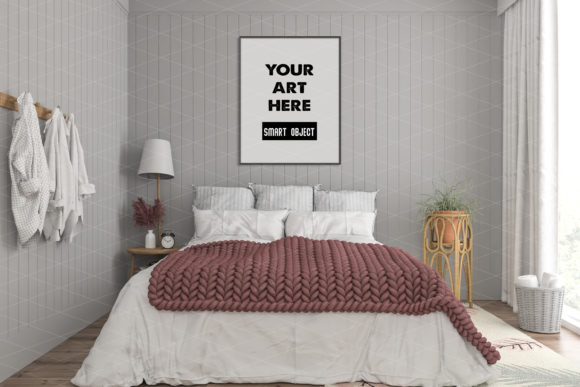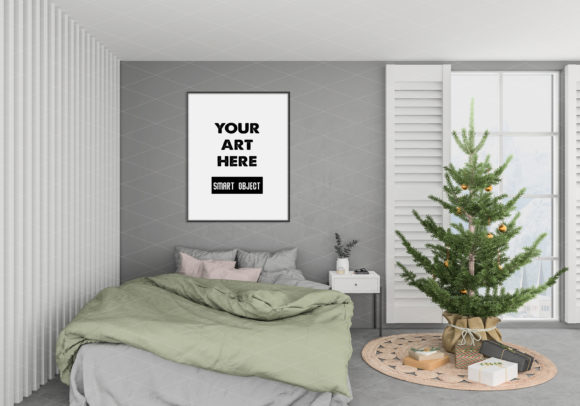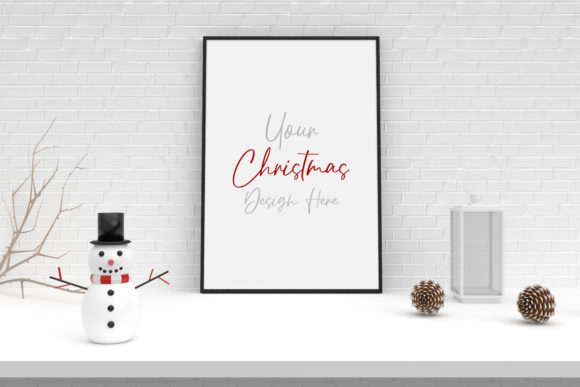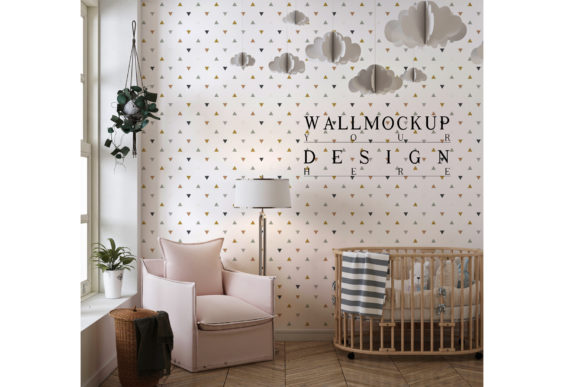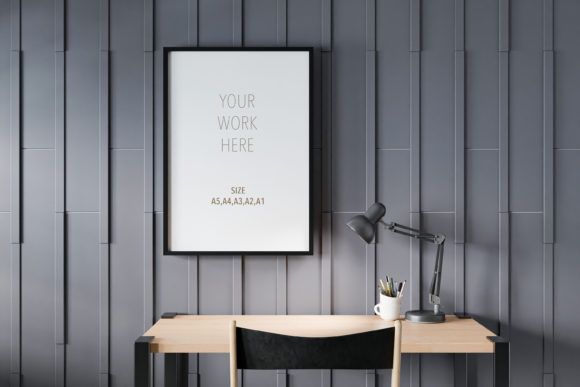
Frame Mockup Poster Mockup Graphic
Presenting visual work to clients, stakeholders, or an audience is rarely just about the image itself. Context matters. The way a piece of artwork, a branding concept, or a photographic series is displayed can influence how it is perceived, understood, and valued. A Frame Mockup Poster Mockup Graphic provides that context instantly. It is a pre-built, high-resolution scene that places your design inside a physical frame, set against a real photographed background. Instead of showing a flat digital file, you show your work as it might appear in a gallery, a studio, or a living room. For anyone who needs to communicate a visual idea clearly and persuasively, this kind of mockup is not just a convenience—it can be a strategic advantage.
Why Context Changes Perception
When a client sees a design on a plain white screen, they are evaluating the image itself. When they see the same design in a framed mockup, they begin to imagine it in a real space. That shift is subtle but powerful. The Frame Mockup Poster Mockup Graphic does more than decorate a presentation. It helps the viewer move from abstract approval to a sense of ownership. They can picture the piece on their own wall, in their own project, or within their brand environment. For decision-makers, that mental leap can reduce hesitation and accelerate sign-off. As a practitioner, using a mockup well means you are not just showing what something looks like. You are showing what it feels like to experience it.
Strategic Value for Creators and Professionals
Whether you are a graphic designer, an illustrator, a marketer, or a small business owner, the way you present your work reflects your professionalism. A high-resolution Frame Mockup Poster Mockup Graphic at 300 DPI gives your portfolio or client proposal a polished, finished look without requiring a photoshoot. You are not asking the client to imagine. You are giving them a realized vision. This can be especially valuable when pitching to audiences who may not have a strong visual imagination. The mockup does the imagining for them. It also signals that you care about the details—that you have considered not just the design, but how it lives in the world.
Planning Your Presentation Around the Mockup
Using a mockup effectively starts before you open the file. Think about the story you want your image to tell. A Frame Mockup Poster Mockup Graphic comes with a fixed background and lighting. You cannot move items or change the scene, so choosing the right mockup for your artwork matters. If you are presenting a bright, playful children’s illustration, a dark, moody gallery wall may not serve your message. Conversely, a minimalist line drawing may feel lost inside an ornate, busy frame. The mockup itself communicates tone. Select one that aligns with the emotion and purpose of your work. This is a planning step many creators skip, but it can make the difference between a presentation that feels intentional and one that feels random.
How the Mockup Supports Client Communication
Clear communication is the foundation of successful client relationships. When you send a flat file, there is often a gap between what you say and what the client imagines. A Frame Mockup Poster Mockup Graphic closes that gap. It provides a visual anchor that both parties can refer to. For example, if you are a watercolor artist selling prints, showing your painting inside a framed mockup helps the buyer understand scale, finish, and presentation. They are not buying a digital file. They are buying an object that could hang in their home. The mockup bridges that perception. For freelancers and agencies, this can reduce back-and-forth revisions and clarify expectations early in the process. It also makes your emails, proposals, and online listings feel more complete and trustworthy.
Real Use Cases Across Different Roles
The versatility of a Frame Mockup Poster Mockup Graphic is one of its strongest attributes. Consider a few realistic scenarios. An educator creating course materials might use the mockup to show students what a finished project could look like, inspiring them to aim higher. A small business owner selling wall art on Etsy or Shopify can use the mockup as the hero image for each product listing, increasing conversion by helping buyers visualize the item in context. A brand strategist presenting a visual identity might place the logo, color palette, and typography in a framed display within the mockup, reinforcing the idea that the brand is ready for the real world. A photographer offering prints can use the mockup to upsell framing options without needing to physically frame every print. In each case, the mockup does not replace the work. It elevates how the work is seen.
Working Within the File’s Limitations
This particular Frame Mockup Poster Mockup Graphic is not a scene creator. You cannot reposition the frame, change the background, or adjust the lighting. That may sound restrictive, but it is actually a strength for focused use. Because the scene is fixed, you do not spend time adjusting sliders or moving elements. You open the PSD file, locate the smart object layer, place your design, and save. The result is a realistic, high-resolution image in minutes. The limitation becomes a time-saving feature. For professionals who need to produce multiple mockups quickly—for a portfolio update, a client batch, or a product launch—this speed matters. The key is to choose the right mockup for each project so that the fixed scene supports, rather than fights, your artwork.
Risks of Using Mockups Without Clear Intent
Every tool has risks when used carelessly. A Frame Mockup Poster Mockup Graphic can mislead if the scene does not match the intended use of the design. If you place a logo concept inside an ornate vintage frame, a client might assume you are recommending that specific framing style for their brand. That can create confusion or unnecessary constraints. Similarly, if the mockup background is busy or stylized, it may distract from the design itself. The viewer might remember the room more than the artwork. To avoid this, always ask yourself what the mockup adds to the communication. If it draws attention away from your design or implies a context you do not intend, consider a different mockup or a simpler presentation. The goal is clarity, not decoration.
Making Intentional, Not Random, Use of Mockups
Random use of a Frame Mockup Poster Mockup Graphic can undermine your credibility. If every piece in your portfolio is shown in the same mockup, the presentation feels repetitive. If the mockup style clashes with your brand identity, the audience may sense something off without knowing why. Intentional use means matching the mockup to the message. For example, if you are building a portfolio to attract gallery clients, choose mockups that resemble clean, professional gallery walls. If you are selling affordable prints to young homeowners, a cozy, modern interior mockup may resonate better. Keep a small library of mockups with different moods—minimal, warm, bright, dark—and select from them based on the project. This approach turns a simple file into a deliberate communication tool.
Long-Term Benefits for Brand and Productivity
Over time, consistent use of high-quality mockups builds a perception of professionalism. When clients repeatedly see your work presented in realistic, well-chosen scenes, they begin to associate that polish with your brand. A Frame Mockup Poster Mockup Graphic becomes part of your standard workflow, not a special effort. It also saves you from the logistical cost of physical photo shoots. You do not need to rent a space, buy frames, or hire a photographer. You can produce presentation-ready images from your desk. That efficiency frees up time for creative work, client interaction, and business development. In a competitive market, small advantages in presentation quality and turnaround speed compound over time.
Practical Guidance for First-Time Users
If you are new to using a Frame Mockup Poster Mockup Graphic, the process is straightforward. After downloading, open the PSD file in Photoshop or a compatible application. Locate the smart object layer—usually labeled clearly in the layers panel. Double-click the thumbnail to open the smart object, paste or drag your artwork into it, scale and position as needed, save, and close. The mockup will update automatically with your design. If you do not have Photoshop, the included JPG with a white blank in the frame can be used with image editing software that supports layering, though the smart object method is faster and cleaner. Always work at the provided 300 DPI resolution to maintain sharpness. Test your design at the actual display size to ensure readability and visual balance.
When the Mockup Adds Real Value to Your Workflow
The Frame Mockup Poster Mockup Graphic is most valuable when you need to communicate a vision quickly and convincingly. Use it when preparing client proposals, updating your online portfolio, creating social media posts that showcase your work, building product listings for an online store, designing presentations for stakeholder meetings, or generating visuals for a print on demand catalog. It is also useful when you want to test how a design reads within a frame before committing to a physical print. In each of these scenarios, the mockup saves time and adds a layer of polish that would otherwise require significant effort. It is not a substitute for thoughtful design. It is a tool for presenting that design with the respect it deserves.
Choosing Quality Over Quantity in Your Presentation
Finally, remember that a Frame Mockup Poster Mockup Graphic is a support tool, not the main attraction. Your artwork remains the focus. The mockup exists to frame it literally and figuratively. Use it to enhance understanding, not to distract. When you choose a mockup, look for realistic lighting, natural depth, and a composition that lets your design breathe. The high resolution and real photo quality of this file give you a strong foundation. By using it thoughtfully, you ensure that every presentation you make reflects not only the quality of your work but also the care you put into how it is seen. That is the kind of detail that builds trust and drives decisions over the long term.